
Grief does not follow a timetable, and it is not an illness waiting for a cure. Many bereaved people still hesitate to seek help, worried about taking up a slot or being told they should be “moving on.” Online grief bereavement counseling offers a different route: a structured, professional relationship that witnesses your loss, makes room for the waves, and teaches practical skills for carrying grief without letting it run your life. This tutorial separates grief counselling from depression treatment, explains why the difference matters, and sets honest expectations. You will learn what bereavement support actually does, why so many people delay asking, and how telehealth removes the waiting-room barrier. We then walk through a first session, clarify what your counsellor does and does not do, and show how to tell whether online work is helping. Later sections cover when grief needs more than general counselling, how grief and PTSD overlap but differ, and why grief can look quieter in men. Finally, you will find clear steps to start online grief counselling. Grief is not a problem to be solved; it is a loss to be carried with support.
What Grief Counselling Is, and What It Is Not

Grief is not an illness. NHS Inform states that grief isn’t an illness and most grieving people never need to visit a GP. Counselling is support, not a diagnosis or cure.
The five stages are not a timetable. The NHS notes you may not experience all of them, they do not happen in a particular order, and acceptance does not mean you like what happened.
There is no deadline. NHS Inform is explicit that there is no deadline on feeling better or recovering.
Counselling is a structured relationship, not advice or a lecture. It helps you carry a loss without it running your life, not erase it.
Talking therapy is one route the NHS signposts, alongside peer support and your existing relationships. The National Bereavement Alliance notes many find sufficient support through existing networks. That does not make counselling unnecessary where it is needed.
Grief Counselling vs Depression Treatment: Why the Difference Matters
Grief is a normal response to bereavement; depression is a clinical condition with its own diagnostic criteria. The NHS signposts them separately; the Matrix (NHS Scotland) treats prolonged grief as its own condition, not a subtype of depression.
The overlap is real. One study cited by the Matrix found 75% of people with prolonged grief disorder also met criteria for another psychiatric condition: anxiety in 62%, depressive disorders in 55%, PTSD in 48%.
Overlap is not sameness. Clinicians distinguish them partly by scope: in grief, painful feelings tend to come in waves and centre on a specific person and loss, whereas depression typically pervades most areas of life with a more constant low mood — but only a proper assessment can tell the difference.
If offered antidepressants for grief alone, ask what the target of treatment is. Psychotherapy is the main recommended treatment for prolonged grief; where depression is also present, medication may have a role — discuss this with your GP or prescribing clinician.
Signals needing medical assessment rather than counselling alone: losing interest in nearly everything, sustained hopelessness, collapsed self-care, or thoughts of not wanting to be here.
What Bereavement Support Actually Does for You: Three Honest Jobs
Once that distinction is clear, bereavement support does three jobs. Knowing them sets honest expectations early.
A witness. A counsellor holds the story of the person you lost without flinching or rushing you, providing a steadiness that is hard to find elsewhere.
Structure for the waves. Grief arrives in surges that ambush you in supermarkets and on anniversaries. A regular session gives them somewhere to land and helps you spot patterns instead of being repeatedly blindsided.
Practical skills. CBT-based bereavement work teaches concrete tools for intrusive thoughts, guilt, avoidance and reminders. NHS Inform’s CBT-based self-help guide takes around 30 to 40 minutes to work through, showing how learnable they are.
What it will not do: erase the loss, produce closure or restore an earlier you. The goal is grief present but not ruling your days or sleep. A counsellor supplies structure; you supply the material and the repetition. The effort is shared.
Why So Many People in the UK Put Off Asking for Help
Even so, the thought that you would be taking up a slot someone needs more than you do is a widely reported feeling, not a fact about your worth. It is worth examining, not obeying.
The stiff upper lip treats visible grief as a burden to others. That is a cultural script, not a clinical finding. The NHS states plainly there is no right or wrong way to feel after a bereavement.
Comparison misleads too. A partner of forty years, a parent, a friend, a miscarriage, an estranged sibling: these are not competing losses. No hierarchy decides who is entitled to support.
Most people wait because it does not feel bad enough yet. Prolonged grief has formal criteria, six months under ICD-11 and twelve months under DSM-5 for adults, but no threshold is required to deserve help. Around 10% of bereaved people develop prolonged grief (Szuhany et al.), and waiting for “bad enough” prolongs unnecessary suffering.
How Online Grief Counselling Removes the Waiting-Room Barrier

The waiting room is often the next hurdle: being seen arriving, making small talk at reception while trying not to cry. That friction alone is enough to cancel and never rebook.
Telehealth removes those threshold events: no travel, parking, waiting room, or chance encounter with someone you know. You join from a room you already feel safe in, and you decide who knows you are there. Sessions fit lunch breaks, the school run, or late evening, which matters once bereavement leave ends and you are back at work trying to appear functional. Online delivery widens who you can see beyond your postcode, helping in rural areas and where NHS waits are long. You can keep the same counsellor if you move.
The honest limit: online work removes access barriers, not the emotional difficulty. Confirm your counsellor’s registration and agree an emergency plan before the first session.
What Happens in a First Session
Once booked, the first session is orientation. Expect intake first: your name, who died, when, your relationship to them, and what has happened since. They also ask about sleep, appetite, work and support at home; grief surfaces there early.
Asked what you want from counselling? There is no wrong answer; ‘I do not know, I just need to say it out loud’ is workable.
Risk questions are routine, not an accusation. Direct questions about self-harm or not wanting to be here are standard practice: safety, not judgement.
You set the pace and boundaries. You choose what to share and when. You will not be pushed to recount the death in detail, and you may say you would rather not go there yet.
For online sessions, use a private room, headphones and a stable connection. Plan the ten minutes after; endings are often harder than the session. Structure varies by clinician, so confirm specifics with your practice.
What Your Counsellor Does, and Does Not Do
Beyond that first conversation, the relationship has shape. Your counsellor listens closely, asks careful questions and notices patterns you cannot see from inside grief. The focus stays on your loss and its aftermath, not general life advice.
They teach and practise skills, agree goals, review how things are going and change approach when something is not working. Progress is examined, not assumed.
Confidentiality holds within clear legal and safety limits, explained in writing from the start so nothing surprises you later.
What they do not do is tell you how to grieve or prescribe a timeline. There is no deadline on feeling better. Counselling does not replace your GP, psychiatrist or emergency services; it works alongside medical care. If medication or a diagnostic assessment is needed, your counsellor should tell you and help you get it. The relationship is warm but bounded; that boundary makes the work possible.
How to Tell Whether Online Grief Work Is Helping
Beyond those boundaries, judge the work by these markers, not by whether grief has gone.
- Waves shorten and space out. Progress is how fast you recover between surges, and how much of your day each takes.
- Function returns: better sleep, regular meals, work or study, contact with some people. Function is more honest than mood, which swings daily.
- Warmth replaces raw pain. Thinking of them, or hearing their name, without being floored. Most people notice this before they feel better.
- You gain language. Naming yearning, guilt, anger and numbness, rather than one fog, is itself a clinical gain.
Agree a review point early: how will you know this is working, and when will you review it? If nothing moves after a fair run of sessions, say so plainly; that is part of treatment, not a complaint. If you feel judged or given no tools, changing counsellor is allowed, not a failure. Grief that intensifies instead needs a different conversation.
When Grief Needs More Than General Counselling
Sometimes general counselling is not enough. Prolonged grief disorder is a recognised diagnosis, with ICD-11 and DSM-5 each setting formal duration and impairment criteria, as noted earlier.
Comorbidity is typical, as the figures cited above show. Assessment must check all of it.
Specificity matters. Prolonged grief responds to grief-focused psychotherapy, not generic support. If grief intensifies rather than eases after six to twelve months, ask for a specialist assessment.
Loss is not always a death. Miscarriage, stillbirth, estrangement, suicide, overdose and pandemic losses add layers. Flag a sudden or traumatic death early.
In immediate danger or unable to keep yourself safe, contact your local emergency services or a national mental health helpline — details at nhs.uk/urgenthelp and samaritans.org. Counselling is not an emergency service.
Grief and PTSD: Similar but Not the Same
Prolonged grief and PTSD can both follow a death, but the driver differs, as noted above. Grief-focused work addresses yearning and your ongoing relationship with the person who died. Trauma-focused approaches, which your clinician can describe, target the distressing memory of the event rather than the loss itself. The wrong focus wastes time and leaves you feeling unheard.
If the death was sudden, violent, witnessed, or you were first on scene, say so in your first session. It changes what they listen for. Trauma-trained practices can hold both threads at once.
Grief Can Look Quieter in Men, and That Is Not the Same as Coping
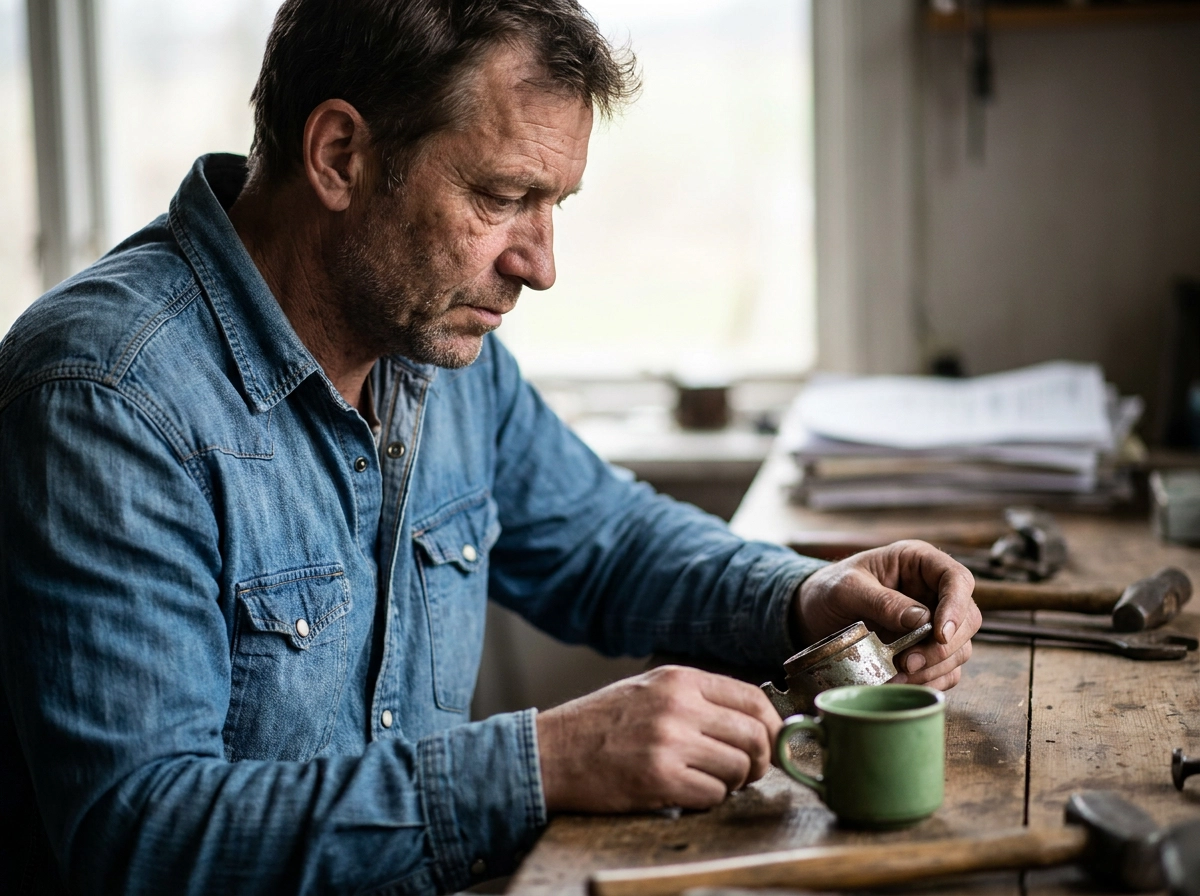
If the death was sudden or witnessed, trauma work may sit alongside grief work. The harder barrier is often quieter: a lifetime of being told to stay useful and avoid the vocabulary of sadness. Some men describe noticing disrupted sleep, irritability or heavier drinking before they recognise grief as the cause — the NHS notes it is not always easy to recognise bereavement in changed feelings or behaviour. Instrumental grieving, doing something with the loss and remembering through action, is recognised, not avoidance. It becomes avoidance when nothing is named or felt. What helps: goals and structure, a counsellor who does not push for tears, permission to name anger and guilt. Naming it matters: unspoken grief surfaces later in health and relationships. If you are the family’s shock absorber, that does not exclude you from support. Support for men’s mental health, including teenage boys and adult men, exists for this reason.
How to Start Online Grief Counselling
If men’s quieter grief has made you hesitate, the next step is practical. Ask direct questions before you commit.
Check credentials. Confirm registration with a body accredited by the Professional Standards Authority (PSA) and ask directly whether the counsellor has experience of bereavement work. General counselling is not the same as grief experience; you are entitled to ask.
Ask about approach and length. Which modality do they use, CBT-based bereavement work or grief-focused psychotherapy? How often will you meet, and how will progress be reviewed? Vague answers are worth noticing. Ask about fees, cancellation terms, session length and support between sessions. Write down your emergency plan before the first session.
Bring one thing. A photograph, an approaching anniversary, or one sentence about the person you lost gives the first session a place to start.
Start small. Agree a short initial run with an explicit review, so you can test the fit without committing to months; interviewing first is allowed. Evening and weekend telehealth slots fit around work and family.
The Takeaway: Grief Is Not a Problem to Be Solved
If the thought of taking up a slot has held you back, name it and act anyway. Online sessions remove the waiting room, not the work. Book a first session and review progress honestly. In a crisis, contact your emergency services or visit samaritans.org or nhs.uk/urgenthelp.
Conclusion
The work remains. Bring one photograph, one anniversary, or one sentence about the person you lost. Book a first session, agree a short initial run, and review the fit honestly. You are not behind. You are allowed to begin. In a crisis, contact your emergency services or visit samaritans.org or nhs.uk/urgenthelp.